



How Pump.fun's Bonding Curve Is Built to Reward Whoever Arrives First
Pump.fun tokens don’t launch with a traditional order book. Instead, price is set by a bonding curve, a deterministic mathematical formula where price rises automatically as more tokens are bought, and every trade settles directly against the contract itself rather than against another trader’s order. The practical effect is a built-in structural advantage for early buyers: the first few SOL deposited into a fresh curve move the price far less than the next fifty, meaning a buyer who lands in the very first block can pay dramatically less than someone arriving even a few seconds later, sometimes 20-60% less for an equivalent position.
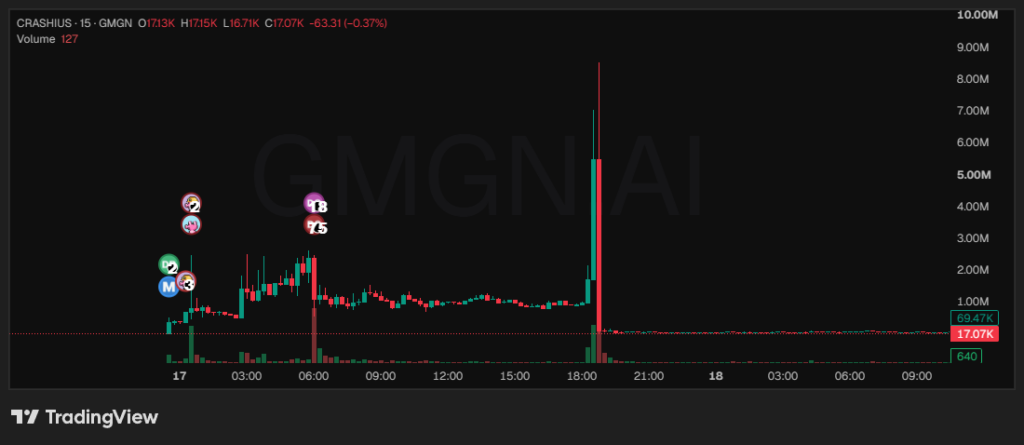
This isn’t a flaw in the system, industry guides describing the mechanic are explicit that “it is the system,” not a bug to be patched. A token typically needs to reach roughly $69,000 in market capitalization to “graduate” to a full trading market on Raydium or PumpSwap, and the overwhelming majority of tokens launched on the platform never get there, they simply lose momentum and decay, often losing 90% or more of their value within hours as buying interest dries up and remaining holders can only exit by selling back into the same shrinking curve.
Sniper Bots and Insider Bundling: Why Retail Rarely Gets a Fair Entry
By the time an ordinary trader sees a token mentioned on social media, the opportunity has often already been captured. Automated sniper bots monitor the blockchain directly and can execute a purchase within milliseconds, some competing specifically to land inside the very first block a token exists in, since landing even one slot later can mean paying meaningfully more for the same tokens. Analysis of Pump.fun’s own $600 million PUMP token sale in mid-2025 found that 93% of top-performing wallets were automated, not human traders manually clicking buy.
Token creators add a second structural disadvantage: many allocate 5-30% of a new token’s supply to themselves at the absolute cheapest point on the curve, often spreading purchases across several connected wallets to obscure how concentrated that ownership really is, a practice commonly called “bundling.” After that initial position is secured, the same creator or insider promotes the token to attract retail buying interest, which pushes the price up the curve, before selling their entire holding into that demand. Because Pump.fun’s pre-graduation curve has no external liquidity pool to withdraw, this isn’t a traditional rug pull in the technical sense, but the effect on a retail buyer is identical: the SOL they deposited is extracted directly by whoever sold into their purchase.
The House Always Wins: Platform Revenue vs. Trader Outcomes
Regardless of how any individual trader’s position turns out, Pump.fun itself collects a 1% fee on every single buy and every single sell, plus a fixed fee of roughly 6 SOL whenever a token successfully graduates. By January 2025, that fee structure had generated the platform close to $400 million in revenue, a figure that grew substantially through 2025 and into 2026 even as the overwhelming majority of individual traders were losing money on the platform during the same period.
This is worth sitting with directly: a memecoin launchpad taking a cut of every transaction profits identically whether a trader wins or loses, the same structural position a casino operator holds, except a licensed casino publishes its RTP and house edge for each specific game, while a memecoin’s effective “edge” against a retail buyer is opaque, varies wildly token to token, and is actively shaped by whichever insiders and bots got there first.
Comparing the Odds: Memecoins vs Actual Casino Games
A licensed crypto casino slot typically carries a published RTP between 92% and 98%, meaning the house edge is a known, fixed 2-8%. Blackjack played with optimal strategy carries a house edge as low as 0.5%, and European roulette sits at 2.7%. Every one of these figures is published, independently audited, and identical for every player at every hand or spin.
Against that backdrop, a platform where historically only 0.412% of participants ever cleared $10,000 in cumulative profit, and where a 2024 analysis found only a 6.47% chance of a wallet making even $100, represents a dramatically worse expected outcome for the median participant than any regulated casino game. It’s worth noting the picture has genuinely shifted at times: CoinGecko research found Pump.fun’s monthly profitable-wallet share climbed from roughly 30% in mid-2025 to over 73% by April 2026. But that same research explicitly cautioned the rebound likely reflects unprofitable traders simply leaving the platform altogether, monthly active wallets fell from 5.2 million to 1.8 million over the same stretch, rather than the underlying game becoming meaningfully fairer, and even during that “recovery” month, roughly 65% of winners made less than $500, while nearly 800,000 wallets still posted losses.
What This Means If You're Considering Memecoin Trading
None of this means every memecoin trade is destined to lose, a small number of consistently profitable wallets clearly exist, some tracked publicly on-chain with tens of millions in accumulated profit. But the structural reality is that those wallets are disproportionately automated bots and well-capitalized insiders operating with a speed and information advantage an ordinary retail trader simply doesn’t have access to, not a level playing field where skill or research reliably overcomes the odds.
If you’re weighing memecoin speculation against actual casino games, it’s worth being honest about which one you can actually evaluate: a slot’s RTP is published and audited before you ever place a bet, while a fresh memecoin’s true odds depend on invisible factors, creator token allocation, bot competition, and existing insider positioning, that most participants have no way to check in advance. Treat memecoin trading with at least the same caution you’d apply to any high-volatility gambling product, covered in more detail on our Responsible Gambling page, and never risk money you can’t genuinely afford to lose.
FAQ – Memecoin Trading vs Gambling
Yes. Dune Analytics data found that of 13.55 million Pump.fun wallets as of January 2025, only about 0.412% had ever realized more than $10,000 in cumulative profit, with an earlier 2024 analysis finding roughly 60% of participants faced overall losses.
A bonding curve is a mathematical pricing formula where a token’s price rises automatically as more of it is bought. Early buyers pay dramatically less than later buyers for the same position, a structural advantage built directly into the pricing math, not a bug.
Analysis of Pump.fun’s 2025 token sale found that 93% of top-performing wallets were automated trading bots rather than human traders, competing to execute purchases within milliseconds of a token’s launch.
A traditional rug pull involves withdrawing liquidity from a trading pool. Pump.fun’s pre-graduation bonding curve has no external pool to pull, so insiders instead buy cheap early allocations and sell into retail-driven demand, extracting value without technically “pulling” anything, but with the same effect on buyers.
CoinGecko research found the share of profitable Pump.fun wallets rose from around 30% in mid-2025 to over 73% by April 2026, but cautioned this likely reflects unprofitable traders leaving the platform (active wallets fell from 5.2 million to 1.8 million) rather than the underlying odds improving, and most winners still made under $500.
A licensed slot typically carries a published 92-98% RTP (a 2-8% house edge), and blackjack with optimal strategy can carry a house edge as low as 0.5%, figures that are audited and fixed for every player. Memecoin trading has no published, audited edge, and historical data shows most retail participants performing far worse than even the highest-house-edge regulated casino games.

Max Ledger
Casino and gaming expert
Max Ledger is a crypto and online casino specialist who has personally reviewed 20+ crypto casinos on this site, covering blockchain gambling platforms, bonus structures, and provably fair gaming.